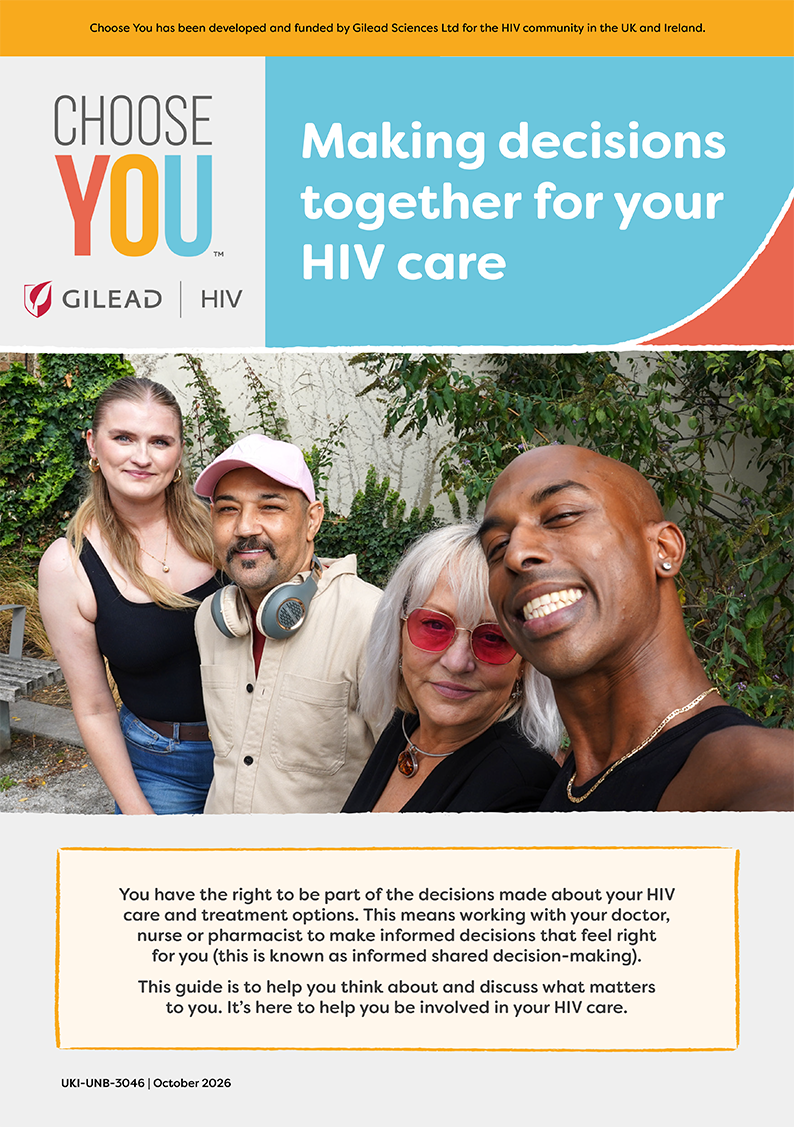

How to Choose You
Your HIV care is about you. Your life, your rights and your health and wellbeing all matter when choices are made about your care. When you put yourself first and feel clear on what matters most to you, it becomes easier to speak about your priorities.
Explore our resources, designed to help you feel ready for open, informed conversations about your care.
Your life with HIV
Living with HIV looks different for everyone. Relationships, work, family responsibilities, finances, housing and immigration status can all shape day-to-day experiences and influence the care and support that feels right for you.
Having the right information before an appointment can help you feel informed and confident about having open conversations with your doctor, nurse or pharmacist. But these conversations don't depend on you alone. Your healthcare team has a role to play too, by creating the time and space needed for honest discussions. Together, you can make sure your HIV care reflects how you live today and how you want to live in the future.
Learn more about why your HIV healthcare team want to know what you and your life are really like.
Your rights
to HIV care
You have the right to be part of the decisions made about your care and treatment. Informed shared decision-making means working with your HIV care team to make choices that reflect your needs, your preferences and your life.
You deserve clear information, time to ask questions and the opportunity to discuss what matters most to you – without pressure or judgement.
Knowing your rights, and understanding what informed shared decision-making is, can help you feel more confident when talking to your care team.
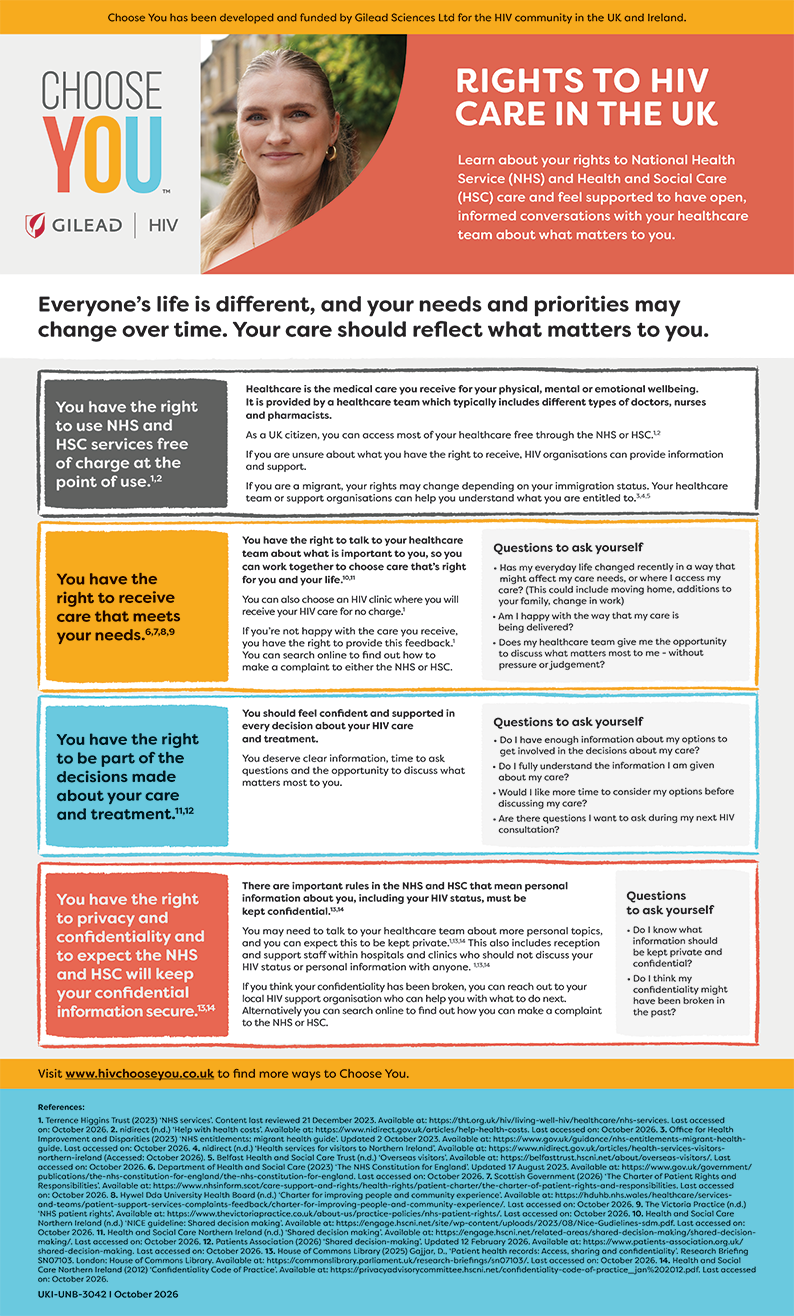
Your rights to HIV care
An overview of your rights to HIV care in the UK and Ireland.


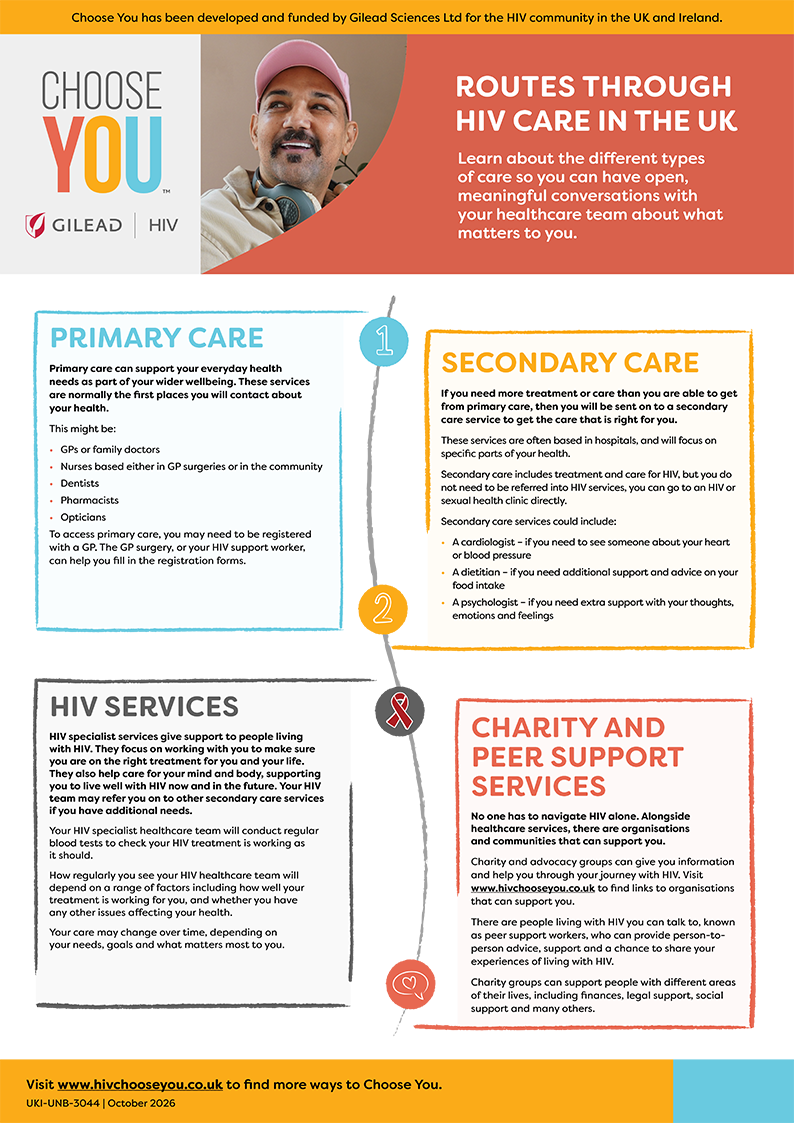
Routes through HIV care
A guide to the different types of care available in the UK and Ireland.
The content within these materials was developed with input from the HIV community.
Your health
and wellbeing
Living well with HIV is about having a healthy mind and body, now and in the future. Small, consistent choices can make a difference to how you feel day to day.
Knowing the facts can also support how you feel. Understanding more about HIV can help build confidence, reduce uncertainty and challenge common misconceptions. For example, if you are on effective treatment and your viral load is undetectable, you cannot pass HIV on to sexual partners. This is known as U=U (Undetectable equals Untransmittable).1 If you would like to know more about what this means for you, speak to your doctor.
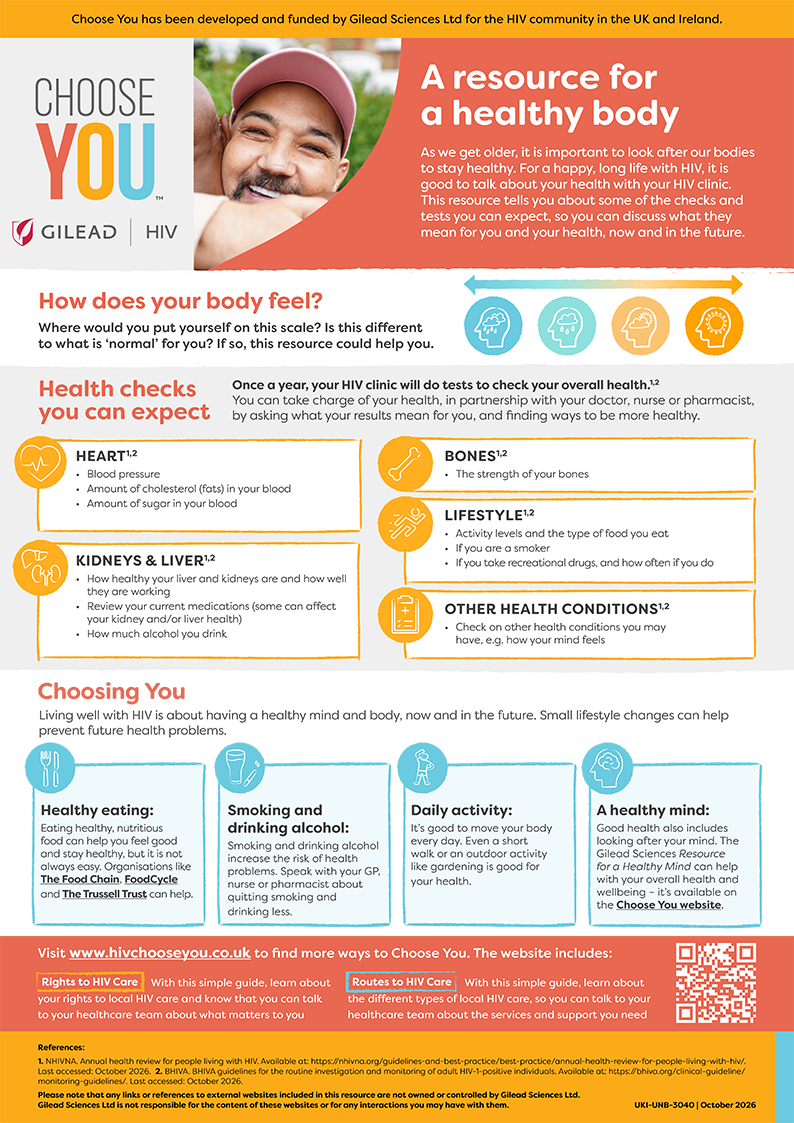
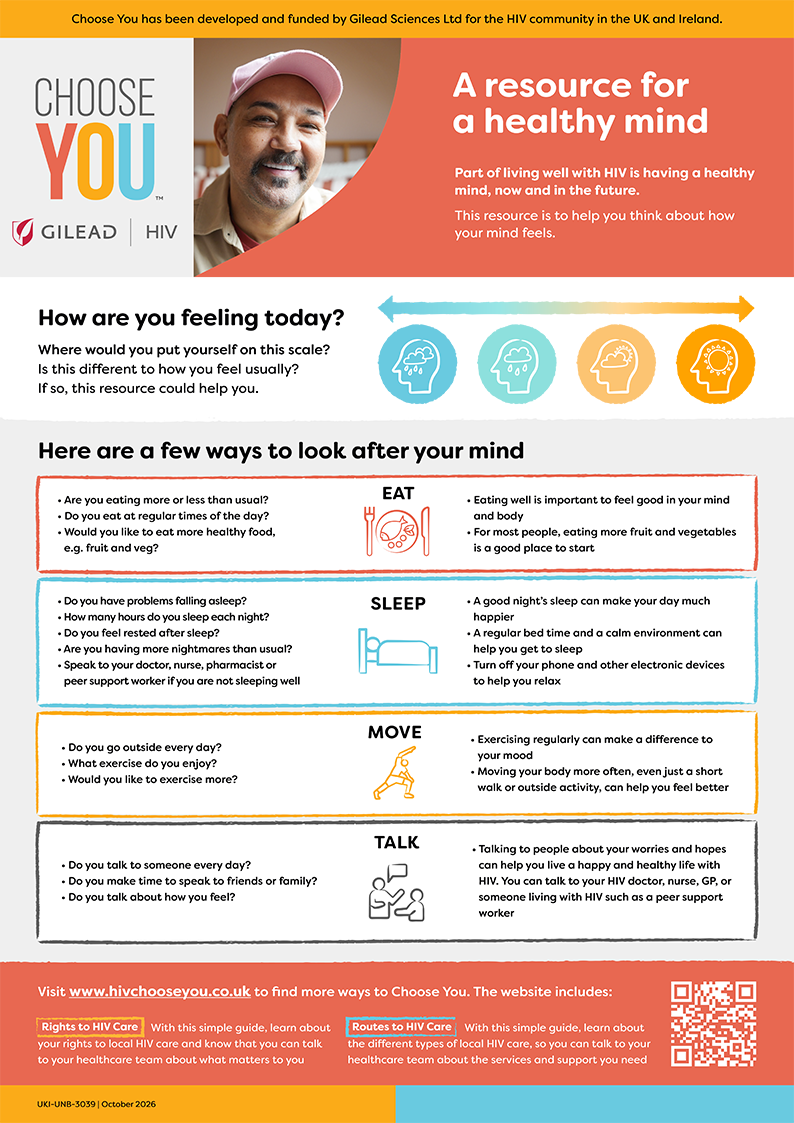
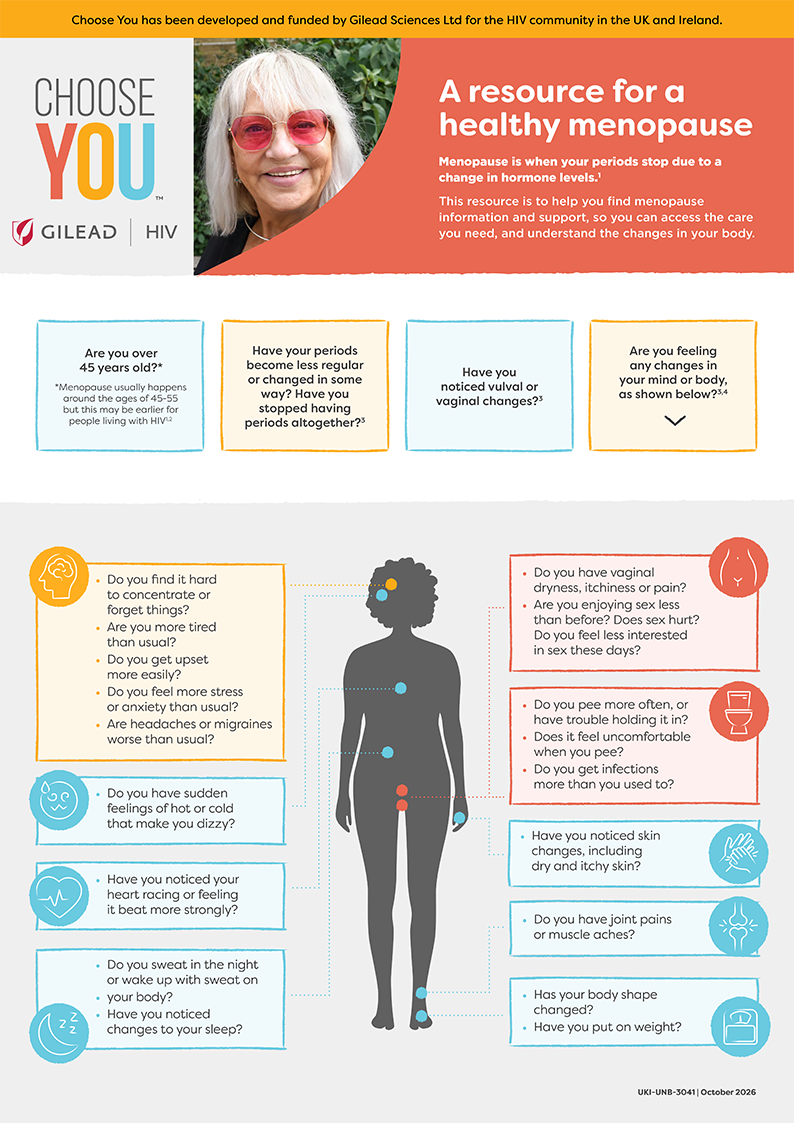
The content within these materials was developed with input from the HIV community.
References
- Terrence Higgins Trust, 2024. Viral load and being undetectable. Available on: https://www.tht.org.uk/hiv/about-hiv/viral-load-and-being-undetectable. Last accessed on: October 2026.